Home Audio · Speaker Accessories
Best Speaker Stands: 12 Rock-Solid Picks for Every Room, Speaker, and Budget
Speaker stands are the cheapest upgrade in audio that almost nobody makes. We compared twelve popular options — from compact desktop clamps to load-bearing tripods — and sorted out which ones actually earn their footprint on your floor.
Ask any audiophile what improved their sound most and you will hear about speakers, amplifiers, maybe a subwoofer. Speaker stands almost never make the list — and that is exactly the problem. Most bookshelf and surround speakers are engineered to perform at ear level, on a rigid, stable platform, with some breathing room around them. Put those same speakers on a bookshelf, a sideboard, or directly on the carpet and you are listening to a different, worse speaker than the one you paid for.
The good news is that fixing this does not require a new amplifier or a room full of acoustic panels. A decent pair of stands costs a fraction of a speaker upgrade and pays you back immediately: tighter bass, a wider and more precise stereo image, and a room that looks intentional instead of improvised. The catch is that the market is flooded with options that look nearly identical in photos and behave very differently once you load a speaker onto them.
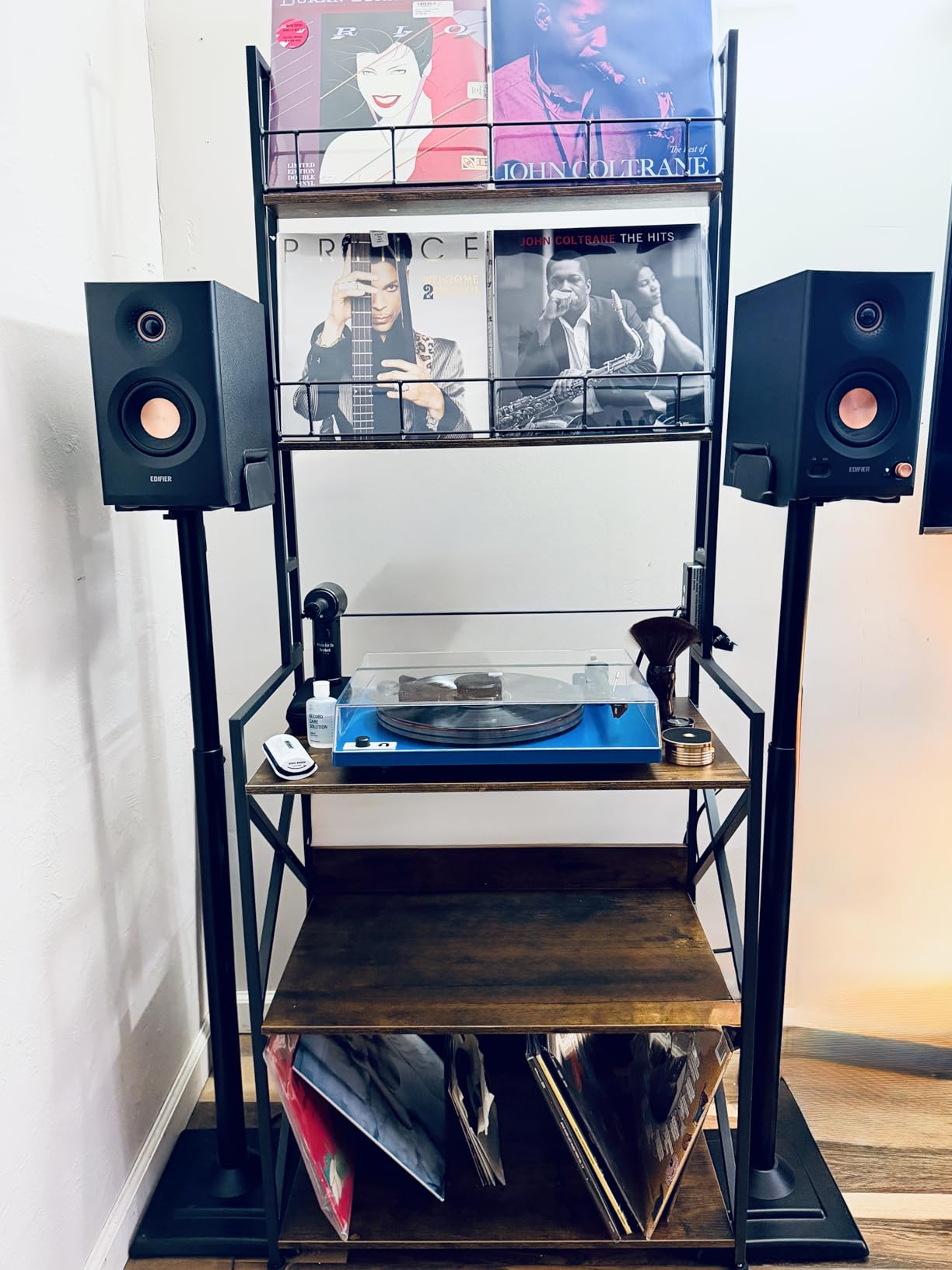
A well-matched stand does three jobs at once: it lifts the tweeter to ear height, drains vibration away from the cabinet, and keeps the speaker safely anchored.
In this guide we break down twelve of the most popular speaker stands you will find online, grouped by what they are genuinely good at rather than by what a marketing page claims. Some are universal pedestal stands built for living-room bookshelf speakers. Some are tripods meant to travel, fold down, and survive being hauled to a gig. Some clamp to the edge of a desk and turn a cramped workspace into a proper near-field listening position. And a few are built like hardware-store equipment, ready to carry speakers that would topple a lightweight pair.
We kept the details honest. Where a specification is not something we can state with confidence, we describe the real-world behavior instead — how stable it feels, what kind of speaker it suits, where it falls short. No invented numbers, no fake star ratings. Just a clear read on which stand belongs in which room.
If you are building out a system from scratch, it is worth reading our best home audio systems roundup first, then coming back here to handle the last few inches of height that make everything else work. Already have gear? Our home audio system setup guide pairs well with the placement advice further down this page.
Ready to Upgrade Your Setup?
Browse today’s most popular speaker stands and compare live pricing.
Check Price on AmazonQuick Comparison: Our Top Picks
Here is every stand in this guide in one place. Scan the “Best For” label to find your use case, then jump to the full review block further down for the details that matter.
| # | Image | Product | Key Specs | Verdict | Check Price |
|---|---|---|---|---|---|
| 1Top Pick |  |
PERLESMITH Universal Speaker StandsBest Overall |
|
The do-everything pair most living rooms need. | Check Price on Amazon |
| 2 |  |
SANUS HTBS Speaker StandsBest for Easy Adjustment |
|
Trusted build with fuss-free height tuning. | Check Price on Amazon |
| 3 |  |
ELIVED Universal Speaker Stand PairBest Value |
|
Solid everyday performance without overspending. | Check Price on Amazon |
| 4 |  |
Kanto SPH Speaker StandsBest Premium Floor Stand |
|
Feels as premium as the speakers it holds. | Check Price on Amazon |
| 5 |  |
Anautin Speaker StandsBest for Small Rooms |
|
Big-speaker presence on a small footprint. | Check Price on Amazon |
| 6 |  |
Amazon Basics Adjustable Tripod Speaker Stand (99.2 lb)Best for Portable Use |
|
High capacity and grab-and-go convenience. | Check Price on Amazon |
| 7 |  |
NiuNyuNeu Pair of Speaker Tripod StandsBest Budget Tripod Pair |
|
A matched pair for very little money. | Check Price on Amazon |
| 8 |  |
Pyle Universal Speaker Stand (132 lb)Best Heavy-Duty |
|
Built for speakers other stands won’t touch. | Check Price on Amazon |
| 9 |  |
Ultimate Support TS-99B TeleLockBest Pro-Grade |
|
Stage-proven security for serious setups. | Check Price on Amazon |
| 10 |  |
MOUNTUP Universal Speaker Stands (clamp-on)Best Clamp-On |
|
Gets speakers off the desk and at ear level. | Check Price on Amazon |
| 11 |  |
Liquid Stands Studio Monitor Stands (desktop clamp)Best for Desktop Monitors |
|
A calmer, tighter low end at the desk. | Check Price on Amazon |
| 12 | 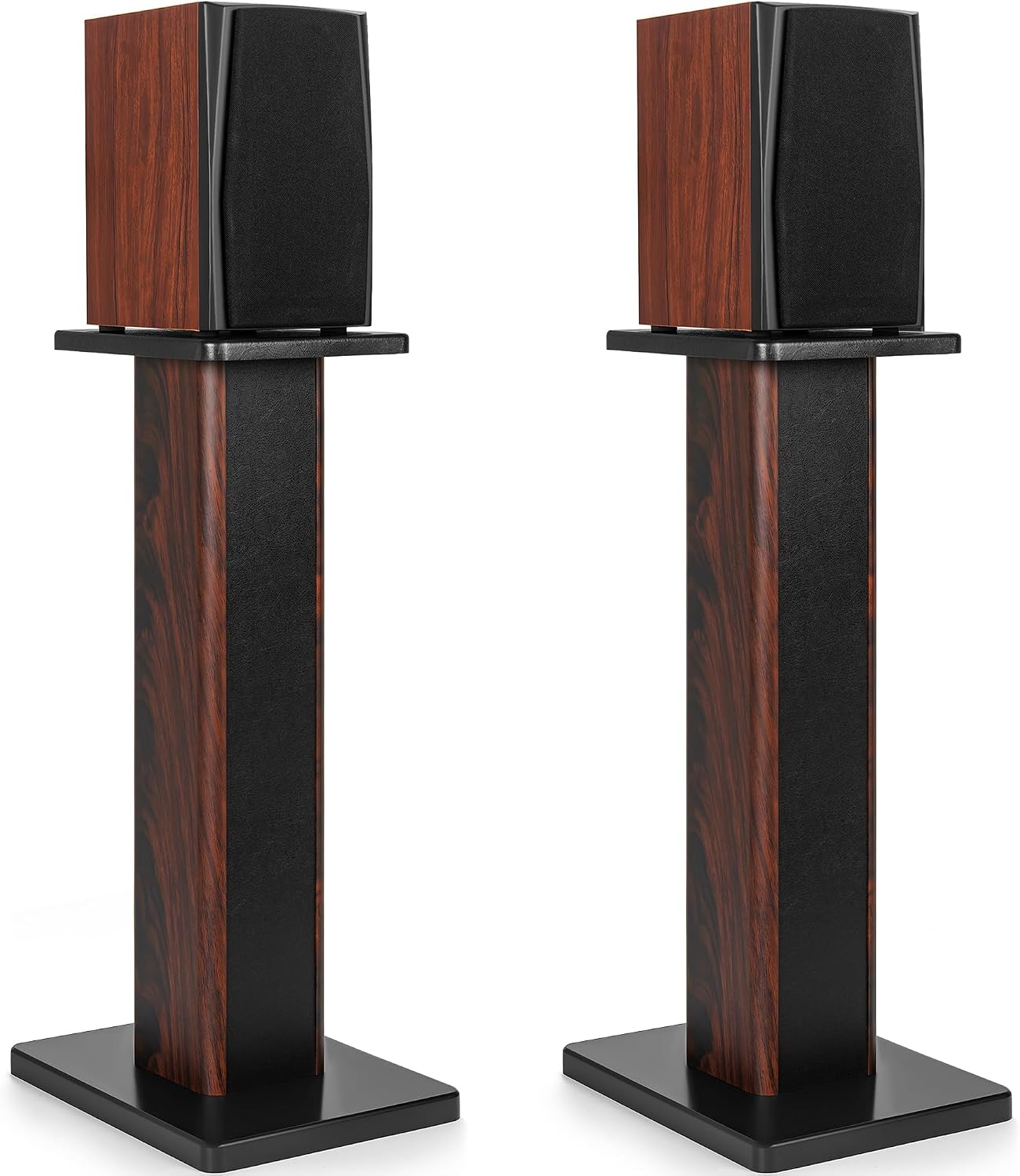 |
iBvivic Small Speaker StandsBest for Compact Speakers |
|
Tiny stands that tidy tiny setups. | Check Price on Amazon |
See All Twelve Stands in One Place
Open the full listing to compare current availability and colors.
Check Price on AmazonWhy Speaker Stands Matter More Than Most People Realize
Speakers are directional instruments. Where you put them, and what they sit on, changes what you hear at least as much as the crossover design inside the cabinet. Stands are not furniture for your speakers — they are part of the speaker system.
Start with the obvious one: height. Tweeters are the drivers responsible for the detail, the air, and the sense of a soundstage. They are also highly directional. If the tweeter is pointed at your shins instead of your ears, you lose the top end and then compensate by turning the volume up, which stresses everything else in the chain. A stand that puts the tweeter at seated ear height solves this without touching a single setting.
Next comes decoupling. A speaker cabinet vibrates — that is literally how it makes sound. Set it on a hollow bookshelf or a glass-topped console and those vibrations turn the furniture into a second, uncontrolled speaker. The result is smeared midrange and boomy, indistinct bass. A rigid stand with a solid top plate gives the vibration somewhere controlled to go, and mass-loading the column (filling it with sand or a similar filler) turns the stand into a sink rather than a resonance chamber.
Imaging and the stereo triangle
When both speakers are at the same height, on identical platforms, at matching distances from your listening position, your brain can reconstruct a stable stereo image. Move one speaker two inches and the phantom center shifts. That is why adjustable stands are worth the small premium: they let you fine-tune until a vocalist sounds like she is standing in front of you rather than somewhere vaguely between the speakers.
Reflections and boundaries
Speakers placed directly against a wall or jammed inside a cabinet excite the room unevenly, producing peaks and dips in the bass that no equalizer fully corrects. Stands give you the freedom to pull speakers out into the room and angle them inward, which is the single biggest room-acoustic improvement most people can make for free. Our home audio system guide covers the rest of that chain, but the placement step always starts with a stand.
Safety, tidiness, and the case for cable management
Let’s be practical for a moment. Speakers perched on a shelf edge are one curious pet or one bumped shoulder away from the floor. Stands with a broad base and a secure top plate make that a non-issue. And the good ones route speaker wire up through the column so you are not staring at a cable draped across the wall — a detail that matters more than people expect once the system is part of a shared living space.
The short version: stands improve imaging, tame bass bloat, protect your speakers, and make the room look deliberate. If you have spent real money on bookshelf speakers and put them on a bookshelf, you are leaving performance on the table.
Give Your Speakers the Platform They Deserve
Start with the most popular universal stands on Amazon.
Check Price on AmazonHow to Choose the Right Speaker Stands: The Only Buying Guide You Need
All speaker stands look more or less the same in a product photo. In person, the differences are enormous. Here is what actually separates a stand that improves your sound from one that just gets your speaker off the carpet.
1. Height and adjustability
Measure your seated ear height first — sit in your normal chair and have someone measure from the floor to your ear. Then aim to have the tweeter land within an inch or two of that line. Some stands are fixed-height, some telescope, and some offer a range of mounting positions on the column. Adjustable stands forgive miscalculation; fixed-height stands are cheaper but demand accurate measurement up front.
2. Stability and base footprint
The top plate should never be wider than the speaker’s base, and the stand’s footprint should be broad enough to resist a nudge. Tripod designs spread weight across three legs and are inherently stable but demand floor space. Pedestal designs look cleaner and take up less visual real estate but need mass to feel planted. If you live with children or pets, favor the lowest center of gravity you can find.
3. Load capacity and speaker size
This is the specification people get wrong most often. A stand that “fits” your speaker is not the same as a stand that safely supports it. Match the stand to the weight and the footprint of your cabinet, and leave headroom. If you are running larger or unusually heavy speakers, look at the heavier-duty options like the Pyle Universal Speaker Stand with its notably high capacity, rather than pushing a lightweight stand to its limit.
4. Top plate and mounting method
Traditional stands use a flat top plate with adjustable-width grips or pads. Clamp-on designs grip the speaker or the desk edge instead. Isolation pads and spikes are the third variable. The right choice depends on where the speaker is going: living-room floor, desk, or stage.
5. Cable management
Hollow columns with a rear or bottom exit let you run speaker wire invisibly. It sounds cosmetic until you have lived with a setup where it works, and then you never go back.
6. Isolation and floor type
Hardwood, tile, and laminate benefit from rubber or silicone feet that grip and damp. Carpet benefits from spikes that pierce through to the subfloor and lock the stand in place. Getting this wrong is the most common cause of “why does my stand wobble.”
Stand types at a glance
| Stand Type | Ideal For | Strengths | Watch Out For |
|---|---|---|---|
| Pedestal / column stand | Living rooms, bookshelf speakers | Clean look, hidden cables, stable when weighted | Needs mass-loading for best results |
| Tripod stand | Events, portable rigs, flexible rooms | Folds flat, wide stance, fast to set up | Legs need clearance from foot traffic |
| Clamp-on / desk stand | Near-field listening, small workspaces | Frees desk space, raises speakers to ear level | Desk edge must be sturdy and suitable |
| Compact / small-format stand | Small speakers, shelves, tight corners | Tiny footprint, low cost, tidy appearance | Limited to lighter, smaller cabinets |
Once you know which type fits your room, the rest is budget and finish. A small stereo on a desk does not need the same hardware as a full surround rig — and if you are still deciding what to put on those stands, our guide to the best home stereo systems under $500 and the best home theater systems will help you plan the whole chain, including the receiver that drives it.
Compare Stands by Type
Filter by pedestal, tripod, and desktop styles in one search.
Check Price on AmazonBest Overall Speaker Stands for Most Living Rooms
These three pairs cover the widest slice of real homes. They fit most bookshelf and surround speakers, adjust to a sensible height, hide their cables, and cost far less than the speakers they support.
| # | Image | Product | Why It Stands Out | Check Price |
|---|---|---|---|---|
| 1Top Pick | |
PERLESMITH Universal Speaker StandsBest Overall | Adjustable fit, tidy cable routing, and a stable base that suits almost any bookshelf speaker. | Check Price on Amazon |
| 2 | |
SANUS HTBS Speaker StandsBest for Easy Adjustment | Quick height changes and simple assembly from a brand that lives in this category. | Check Price on Amazon |
| 3 | |
ELIVED Universal Speaker Stand PairBest Value | A complete pair with proper cable management at a genuinely approachable price. | Check Price on Amazon |
PERLESMITH Universal Speaker Stands
The PERLESMITH pair is the default answer for most people, and for good reason. It is a universal design, which means the top plate adjusts to grip speakers of different widths rather than forcing you to match a specific cabinet size. That single feature removes the biggest source of buyer’s remorse in this category.
Key Features
- Adjustable-width top plate designed to suit most bookshelf and surround speakers.
- Height-adjustable column so you can land the tweeter at seated ear level.
- Internal cable routing keeps speaker wire out of sight and out of the way.
- Stable base geometry that resists tipping in everyday living-room conditions.
What We Like
- Fits a wide range of speaker sizes without adapters
- Cable management is genuinely usable, not decorative
- Height tuning lets you dial in the listening position
- Looks clean from every angle
Keep in Mind
- Assembly rewards patience and a clear read of the instructions
- Finish is deliberately plain — function over flourish
- Very large or heavy cabinets deserve a heavy-duty stand instead
Best for: Anyone buying a first pair of stands for bookshelf or surround speakers and wanting one purchase to solve the problem for good.
PERLESMITH Universal Speaker Stands
Our top overall pick for most living rooms.
Check Price on Amazon
SANUS HTBS Speaker Stands
SANUS has been building speaker and TV support hardware long enough to know where assembly usually goes wrong, and the HTBS reflects that experience. It is a straightforward, height-adjustable stand with a clear top plate and a design that makes sense the moment you take it out of the box.
Key Features
- Height-adjustable pillar for precise alignment with your listening position.
- Top plate designed to hold small and mid-size speakers securely.
- Thoughtful hardware and labeling that speeds up assembly.
- Understated black finish that disappears behind the speaker.
What We Like
- Fast, frustration-free setup
- Easy to re-adjust when you move furniture
- Consistent build quality across the pair
- Reassuring stability for its intended speaker size
Keep in Mind
- Typically sits above bargain-tier pricing
- Sized for small to mid-size speakers, not heavy floorstanders
Best for: Listeners who reposition gear often and want height adjustments to take seconds rather than minutes.
ELIVED Universal Speaker Stand Pair
Not everyone wants to spend as much on stands as on a decent streaming component. The ELIVED pair makes a compelling case that you do not have to. It covers the fundamentals — adjustable height, universal fit, cable management — in a matched pair that looks consistent on either side of your TV or console.
Key Features
- Adjustable top plate compatible with most standard bookshelf speakers.
- Height adjustment for tweeter-to-ear alignment.
- Column cable routing for a clean, wire-free look.
- Matched pair so both channels sit and look identical.
What We Like
- Genuinely affordable as a complete pair
- Covers the features that actually affect sound
- Easy to place in tight rooms
- Neutral styling that suits most décor
Keep in Mind
- Not intended for very heavy, large cabinets
- Less refinement in the hardware than premium options
Best for: First-time stand buyers, secondary systems, and anyone outfitting more than one room on a budget.
ELIVED Universal Speaker Stand Pair
The value pick that still does the important things right.
Check Price on AmazonWhich Overall Stand Fits Your Speakers?
Compare all universal bookshelf stands side by side.
Check Price on AmazonBest Budget-Friendly and Space-Saving Stands
If your speakers are compact, your room is small, or you simply do not want to spend more than you have to, this group delivers. These are the stands that punch above their price while asking for very little floor or shelf space.
| # | Image | Product | Why It Stands Out | Check Price |
|---|---|---|---|---|
| 1Top Pick | |
NiuNyuNeu Pair of Speaker Tripod StandsBest Budget Tripod Pair | A matched, packable pair that costs very little and travels well. | Check Price on Amazon |
| 2 | |
Anautin Speaker StandsBest for Small Rooms | Compact footprint with flexible positioning for awkward, tight spaces. | Check Price on Amazon |
| 3 | |
iBvivic Small Speaker StandsBest for Compact Speakers | Small-format stands that make tiny setups look intentional. | Check Price on Amazon |
NiuNyuNeu Pair of Speaker Tripod Stands
Tripod stands have one big advantage over pedestal designs: they fold. That makes them perfect for anyone who moves gear between rooms, takes a setup to a friend’s place, or just wants the option to clear the floor quickly. The NiuNyuNeu pair delivers that portability at a price that is hard to argue with.
Key Features
- Classic three-leg tripod stance that resists wobble on uneven floors.
- Folds down compactly for storage or transport.
- Height adjustment to bring small and mid-size speakers to ear level.
- Supplied as a pair so both channels match out of the box.
What We Like
- Excellent value for a matched pair
- Packs down and stores easily
- Wide stance feels reassuringly stable
- Great for temporary or multi-room setups
Keep in Mind
- Legs need clearance — not ideal in busy walkways
- Tripod styling reads “utility” rather than “living room”
- Best suited to lighter speakers
Best for: Budget builds, portable rigs, and anyone who wants the flexibility to pack everything away.
NiuNyuNeu Speaker Tripod Stands
A matched, packable pair at a very friendly price.
Check Price on Amazon
Anautin Speaker Stands
Small rooms are their own engineering problem. Every piece of gear competes for the same square footage, and a full-size stand can feel like it takes up more space than the speaker it holds. The Anautin stands are built for exactly that situation, with a compact footprint and enough adjustability to make placement work in a corner, beside a desk, or alongside a narrow media unit.
Key Features
- Reduced footprint designed for tight rooms and narrow furniture.
- Adjustable positioning to help aim speakers toward the listening spot.
- Sized for small and medium speakers commonly used in apartments.
- Low-profile look that keeps the room feeling open.
What We Like
- Really does save floor space
- Easy to tuck beside furniture
- Light enough to reposition without effort
- Approachable price for a pair
Keep in Mind
- Not designed for large or heavy cabinets
- Smaller bases reward careful leveling
Best for: Apartments, bedrooms, and small living rooms where floor space is the limiting factor.
iBvivic Small Speaker Stands
Some speakers are simply small — compact desktop monitors, satellite surrounds, smart-speaker companions — and a full-size floor stand looks absurd under them. The iBvivic stands are sized for exactly that job, giving a small cabinet a stable, slightly elevated platform without dominating the shelf or desk.
Key Features
- Small-format design matched to compact speaker cabinets.
- Stable platform that isolates the speaker from shelf or desk surfaces.
- Low visual footprint that keeps a desk or bookshelf looking tidy.
- Simple setup with no complicated hardware.
What We Like
- Perfect proportions for small speakers
- Reduces surface resonance on shelves and desks
- Affordable and easy to live with
- Takes up almost no room
Keep in Mind
- Limited to smaller, lighter speakers
- Not a substitute for a proper floor stand
Best for: Compact speakers on desks, shelves, and sideboards where a full stand would be overkill.
Building a Compact System?
See which small speakers pair best with space-saving stands.
Check Price on AmazonBest Heavy-Duty and Pro-Grade Stands
Some speakers are heavy. Some get moved constantly. And some setups simply need hardware that behaves like stage equipment rather than living-room accessory. These three are built for that reality.
| # | Image | Product | Why It Stands Out | Check Price |
|---|---|---|---|---|
| 1Top Pick | |
Pyle Universal Speaker Stand (132 lb)Best Heavy-Duty | The highest stated capacity here — for cabinets other stands can’t safely hold. | Check Price on Amazon |
| 2 | |
Ultimate Support TS-99B TeleLockBest Pro-Grade | TeleLock collar security and tour-ready construction for demanding use. | Check Price on Amazon |
| 3 | |
Amazon Basics Adjustable Tripod Speaker Stand (99.2 lb)Best for Portable Use | Strong stated capacity with a folding tripod that packs away fast. | Check Price on Amazon |
Pyle Universal Speaker Stand (132 lb)
When a speaker is genuinely heavy, the stand is no longer an accessory — it is a safety issue. The Pyle universal stand is rated for up to 132 lb, which puts it in a different league from typical living-room stands and makes it a sensible choice for larger cabinets, powered speakers, and anything that would make a lightweight stand visibly flex.
Key Features
- Stated weight capacity of up to 132 lb for demanding speaker cabinets.
- Universal mounting design suited to a broad range of speaker shapes.
- Robust construction intended for repeated setup and teardown.
- Height adjustment to position larger speakers correctly.
What We Like
- Headroom for speakers that overwhelm lighter stands
- Rugged, no-nonsense construction
- Versatile mounting across speaker types
- Confidence-inspiring once locked in place
Keep in Mind
- Bulkier than decorative living-room stands
- Overkill for small bookshelf speakers
Best for: Large, heavy, or powered speakers where load capacity is the deciding factor.
Pyle Universal Speaker Stand
High-capacity support for speakers that need real headroom.
Check Price on Amazon
Ultimate Support TS-99B TeleLock
Ultimate Support builds stands that spend their lives being raised, lowered, loaded, and packed away night after night. The TS-99B carries that touring DNA into a tripod stand, with the TeleLock collar system at its heart — a locking mechanism that makes height changes feel deliberate and secure rather than hopeful.
Key Features
- TeleLock collar system for confident, controlled height adjustment.
- Tripod architecture engineered for stability under real-world loads.
- Construction designed for frequent setup, breakdown, and transport.
- Black professional finish that suits stage and studio alike.
What We Like
- Locking mechanism feels genuinely secure
- Built to survive repeated transport
- Stable stance even at working height
- Trusted by working audio professionals
Keep in Mind
- Premium hardware carries a premium price
- Industrial look is intentional, not decorative
Best for: Anyone who moves equipment regularly, or who simply wants the most secure locking stand in the room.
Ultimate Support TS-99B TeleLock
Tour-grade locking hardware for serious setups.
Check Price on Amazon
Amazon Basics Adjustable Tripod Speaker Stand (99.2 lb)
The Amazon Basics tripod stand occupies a useful middle ground: stated capacity up to 99.2 lb, folding tripod legs, and a price that makes buying two feel reasonable. It is the stand you buy when you want strength without committing to full professional hardware.
Key Features
- Stated weight capacity of up to 99.2 lb for substantial speakers.
- Adjustable-height tripod legs that fold down for transport.
- Wide three-point stance for dependable stability.
- Straightforward design with no unnecessary parts to lose.
What We Like
- Strong capacity for the category
- Folds flat and stores easily
- Great value when buying a pair
- Quick to set up and take down
Keep in Mind
- Triangular footprint needs room to spread
- Utilitarian styling in a formal living room
Best for: Home events, multi-purpose rooms, and portable setups that still need to carry real weight.
Amazon Basics Tripod Speaker Stand
High capacity with grab-and-go portability.
Check Price on AmazonHeavy speakers usually mean a serious signal chain behind them. If yours is fed by a multi-channel receiver, it is worth understanding how receiver channels work so the stands, the speakers, and the amplification all line up correctly.
Need Serious Load Capacity?
Browse heavy-duty stands rated for larger speaker cabinets.
Check Price on AmazonBest Premium and Desk-Friendly Stands
This group covers two very different needs with one shared goal: a cleaner, more deliberate setup. On one side, a premium floor stand that treats your speakers like the investment they are. On the other, clamp-mounted solutions that reclaim your desk while fixing near-field listening height.
| # | Image | Product | Why It Stands Out | Check Price |
|---|---|---|---|---|
| 1Top Pick | |
Kanto SPH Speaker StandsBest Premium Floor Stand | Heavy steel, hidden cables, and stable footing that matches premium speakers. | Check Price on Amazon |
| 2 | |
MOUNTUP Universal Speaker Stands (clamp-on)Best Clamp-On | Clamps to the desk edge and lifts speakers into proper listening position. | Check Price on Amazon |
| 3 | |
Liquid Stands Studio Monitor Stands (desktop clamp)Best for Desktop Monitors | A stable, isolated platform for near-field monitors at the desk. | Check Price on Amazon |
Kanto SPH Speaker Stands
There is a point where a stand should stop being invisible and start matching the quality of the speaker on top of it. The Kanto SPH lives at that point. Built around substantial steel and a hollow column designed to swallow cabling, it has the weight and the composure to support premium bookshelf speakers without looking like a compromise.
Key Features
- Substantial steel construction that adds real mass under the speaker.
- Hollow column design for completely hidden cable routing.
- Adjustable footing to level the stand on uneven floors.
- Clean, modern styling intended to sit alongside quality furniture.
What We Like
- Feels and looks like premium hardware
- Excellent stability under substantial speakers
- Best-in-class cable concealment
- Levels easily on imperfect floors
Keep in Mind
- Priced above entry-level pairs
- Heavier to move once positioned
Best for: Owners of premium bookshelf speakers who want a stand that looks and behaves like part of the system. It pairs especially well with detailed speakers like those in our Marshall Acton III review.
Kanto SPH Speaker Stands
Premium steel support for premium bookshelf speakers.
Check Price on Amazon
MOUNTUP Universal Speaker Stands (clamp-on)
Desk speakers sitting directly on the desk surface have two problems: they fire at your chest, and they turn the desk into a sounding board. The MOUNTUP clamp-on stands solve both at once, gripping the desk edge and raising the speaker toward ear level while keeping the desktop clear for actual work.
Key Features
- Clamp-on mounting that attaches to a suitable desk or table edge.
- Elevates speakers toward seated ear height for better imaging.
- Frees the desktop of bulky stands and awkward angles.
- Universal design for small and medium speakers.
What We Like
- Reclaims usable desk space immediately
- Notably improves near-field listening position
- Secure clamping action
- Easy to adjust and re-aim
Keep in Mind
- Requires a sturdy, compatible desk edge
- Sized for lighter, smaller speakers
Best for: Desk-based listening, small studios, and shared workspaces where surface area matters.
MOUNTUP Clamp-On Speaker Stands
Lift your desk speakers to ear height in minutes.
Check Price on Amazon
Liquid Stands Studio Monitor Stands (desktop clamp)
Studio monitors are designed to be listened to at close range, on a rigid, decoupled platform, with the tweeter pointed at the listener. On a bare desktop, none of that is happening. These clamp-mounted monitor stands exist to restore the intended listening geometry — and the difference in low-end clarity is often the most audible improvement in the whole setup.
Key Features
- Clamp-mounted platform built for near-field studio monitors.
- Stable, decoupled surface that reduces desk-borne resonance.
- Positioning freedom to aim monitors precisely at the listening point.
- Compact footprint that keeps the workspace functional.
What We Like
- Noticeably tighter bass at the desk
- Rigid platform with no wobble
- Easy to angle and aim
- Keeps the desk usable
Keep in Mind
- Intended for smaller monitors, not large cabinets
- Desk must be solid enough to clamp safely
Best for: Music producers, editors, and desk listeners running near-field monitors who want proper positioning without giving up workspace.
Liquid Stands Studio Monitor Stands
Isolated, ear-level monitors at the desktop.
Check Price on AmazonUpgrading a Desktop Listening Setup?
Compare clamp-on and desktop monitor stand options.
Check Price on AmazonPlacement and Setup Tips That Make Any Stand Sound Better
Buying the right stand is half the job. Where you put it is the other half — and the adjustments below cost nothing but ten minutes of your time.
Get the height right first
Sit in your normal listening chair. Have someone measure from the floor to your ear. Adjust the stands until the tweeter sits within an inch or two of that measurement. If you cannot hit it exactly, err slightly high — raising your head a fraction is easier on the sound than craning your neck, and most rooms allow for a small tilt adjustment.
Build the stereo triangle
Imagine an equilateral triangle with the two speakers at two corners and your head at the third. That is the classic starting geometry for stereo listening, and it is worth measuring out rather than eyeballing. Symmetry matters: identical distances from the wall behind the speakers, identical distances from the side walls where possible.
Toe-in and aiming
“Toe-in” is the practice of angling speakers inward so they point at the listening position rather than straight ahead. Small speakers with narrow dispersion usually benefit from a healthy amount of toe-in; wide-dispersion designs often sound best pointed almost straight forward. Try both and trust the setting that makes vocals lock into the center.
Pull the speakers off the wall
Speaker stands give you the freedom to move cabinets away from boundaries, and that is where much of the benefit lives. Bass tightens up, the soundstage deepens, and the room stops fighting the system. Even a hand’s width of extra clearance is audible.
Level, then load
Set up the stands on the floor first, level them, and only then place the speakers. If a stand wobbles at all before the speaker goes on, fix it before loading — a loaded stand that rocks is both an acoustic problem and a safety problem.
Once the physical setup is right, calibrate the electronics. Our guides on connecting speakers to a receiver, calibrating receiver speakers, and setting up a home theater receiver walk through the rest of the process.
Room Types, Floor Surfaces, and Protecting Your Home
A stand that behaves perfectly on carpet can skate across a hardwood floor, and a stand that looks right in a spacious living room becomes an obstacle in a narrow hallway. Match the hardware to the room.
Hardwood, tile, and laminate
Hard floors are unforgiving of sharp feet. Use rubber or silicone pads — they grip, they damp vibration, and they leave no marks. If your stand came with spikes intended for carpet, set them aside for hard surfaces rather than risking a scratched floor. A small isolation pad between the stand’s top plate and the speaker cabinet also helps on these surfaces.
Carpet and rugs
Carpet is where spikes earn their keep. They pierce through the pile and lock into the subfloor, turning a wobbly stand into a planted one. If your stand does not include spikes, a rigid base plate under the stand solves most of the soft-surface instability.
Small rooms and shared spaces
In apartments and open-plan homes, stands need to survive real life: vacuum cleaners, pets, guests, and children leaning on things. Favor a low center of gravity, a wide base, and a top plate that grips the speaker. Clamp-mounted designs are an excellent answer in tight workspaces where floor space simply does not exist.
Keeping things quiet for neighbors
If you live above someone, decoupling matters even more. A properly isolated stand transmits less energy into the floor structure, which means less low-frequency thump traveling through the building. Add a quality isolation pad and consider a subwoofer isolation platform as well. If you are weighing wireless options for a shared space, our look at whether wireless speakers lose quality and whether wireless speakers are any good covers the trade-offs.
A quick checklist before you drill, clamp, or load
- Is the floor level where the stand will sit, and can the stand compensate?
- Is there enough clearance around tripod legs for normal foot traffic?
- Can the surface support the clamp if you are using a desk-mounted design?
- Are cables routed so nothing becomes a trip hazard?
- Is the speaker secured to the top plate the way the manufacturer intends?
Protect Your Floors and Your Speakers
Shop stands with proper feet, spikes, and isolation options.
Check Price on AmazonMatching Stands to Your Speaker Type
“Speaker stand” covers a lot of ground. The right hardware depends entirely on what is sitting on top of it — and in some cases, beside it.
Bookshelf and stand-mount speakers
This is the classic use case, and the one most of this guide addresses. A pedestal or column stand with a universal top plate is the natural fit. Height adjustability and cable management are the two features worth paying for, and mass-loading the column is the free upgrade most people skip.
Surround speakers in a home theater
Surrounds are often higher than ear level by design, mounted on tall stands or brackets toward the back of the room. Look for stands that reach the height you need without becoming top-heavy, and prioritize stability over looks. If you are still planning the whole system, our Dolby Atmos explained guide is useful background on where each speaker belongs.
Studio monitors and near-field listening
Monitors want rigidity, isolation, and a precise angle toward the ears. Clamp-mounted desktop stands and dedicated monitor platforms are the answer here, and the payoff is usually heard first in the bass.
Compact and smart speakers
Small speakers look silly on full-size stands and often sit better on compact, low-profile supports that simply decouple them from the surface. If you are choosing the speaker itself, our Amazon Echo Studio review, best Bluetooth speakers for home, and best retro Bluetooth speakers are good starting points.
Portable and party speakers
If the speaker moves around the house or travels, a folding tripod stand is far more practical than a fixed pedestal. The same goes for karaoke setups — see our best karaoke systems for home — where speakers often need to be raised above a crowd and packed away afterwards. A high-capacity portable stand like the NiuNyuNeu tripod pair handles that rhythm well.
Rule of thumb: the smaller and lighter the speaker, the more a compact stand helps. The larger and heavier the speaker, the more the stand’s load rating and base footprint matter.
Match the Stand to the Speaker
Explore stands sized for bookshelf, surround, and compact speakers.
Check Price on AmazonCommon Mistakes to Avoid When Buying and Using Speaker Stands
Most stand-related disappointment comes down to a handful of predictable errors. Here is how to skip them.
1. Buying before measuring
Measure your seated ear height, your speaker’s base footprint, and the space where the stand will live before you order anything. A stand that is too tall, too short, or too wide for the speaker is a bad purchase no matter how well reviewed it is.
2. Ignoring the weight rating
“It fits” is not the same as “it holds.” Give yourself headroom above the speaker’s weight, especially with larger or powered cabinets. If you are running something substantial, go straight to heavy-duty options rather than gambling on a lightweight stand.
3. Skipping mass-loading
Many column stands are designed to be filled. An empty column resonates; a filled one damps. It is the single cheapest sonic improvement available in this category.
4. Leaving the stand on the wrong floor setup
Spikes on hardwood, rubber feet on carpet — exactly backwards. Fixing this removes wobble, protects the floor, and often improves the sound.
5. Pushing speakers against the wall
Stands give you the freedom to position. If you push the speaker back against the boundary you are throwing away much of the benefit. Pull them forward and listen to the difference.
6. Forgetting the cables
Loose cables across a walkway are a genuine hazard and an easy way to pull an expensive speaker onto the floor. Route them through the column and secure the slack.
7. Overlooking symmetry
Two different stands, or two stands at two different heights, will cost you the stereo image. Always set up as a matched pair.
8. Matching the stand to the TV instead of the speakers
Stands hold speakers. If your center channel or television needs support instead, that is a different piece of hardware entirely — see our guide on receivers versus soundbars and connecting a receiver to a TV to make sure the whole chain makes sense.
Avoid the Common Pitfalls
Start with stands that match your speakers, floor, and room.
Check Price on AmazonCare, Maintenance, and Making Your Stands Last
Speaker stands are not high-maintenance, but a few minutes of occasional attention keeps them safe, silent, and stable for years.
Re-check the hardware periodically
Threads loosen over time, especially on stands that get bumped or moved. Every few months, check that the top plate, the height collar, and any clamp are still tight. This takes less time than making coffee and prevents the slow creep of instability.
Inspect the feet and pads
Rubber feet compress and wear; spikes can work loose. Replace worn pads rather than living with a stand that has started to rock. On hard floors this also protects the surface from gradual scuffing.
Keep the column dry and dust-free
If you have mass-loaded a stand with sand or a similar filler, keep moisture away from the column. Dust the base and the top plate regularly — grit trapped under a top plate acts like sandpaper against the speaker’s finish.
Revisit placement after any room change
New sofa, new rug, moved bookshelf — all of it changes the acoustics. When the room changes, re-check the height, the toe-in, and the distance from the wall. While you are at it, re-run your receiver’s calibration routine; if you need a refresher, our piece on calibrating receiver speakers covers the essentials.
Plan for the long term
Good stands outlast several generations of speakers. Buy once, buy well, and the stand will still be working when the speakers on top have moved on. That is why it makes sense to choose a stand with adjustable fit and honest load capacity rather than one that only works with the exact cabinet you own today.
Buy Once, Enjoy for Years
Choose durable stands with replaceable feet and solid hardware.
Check Price on AmazonWhich Should You Buy? Our Final Recommendations by Use Case
If you scrolled straight to this section, here is the fast version: the right stand depends on your speaker, your floor, and how often things move around. Match the list below to your situation.
You want one pair that works for almost anything
Choose the PERLESMITH Universal Speaker Stands. The adjustable top plate, height tuning, and real cable management cover the needs of most bookshelf and surround speakers in most rooms.
You want fast, frustration-free adjustment
The SANUS HTBS Speaker Stands are the pick for anyone who rearranges furniture, hosts often, or simply wants height changes to be quick and repeatable.
You are building on a budget
The ELIVED Universal Speaker Stand Pair delivers the essentials at a friendly price. If portability matters more than polish, the NiuNyuNeu tripod pair is a great alternative.
Your speakers are heavy
Go straight to the Pyle Universal Speaker Stand with its high stated capacity, or the Ultimate Support TS-99B TeleLock if you want professional-grade locking hardware.
You listen at a desk
Clamp-on designs win here. The MOUNTUP clamp-on stands suit general desk speakers, while the Liquid Stands studio monitor stands are purpose-built for near-field monitors.
You want a premium look to match premium speakers
The Kanto SPH Speaker Stands have the mass, the finish, and the cable concealment to sit beside serious bookshelf speakers without looking like an afterthought.
Your room is tiny
The Anautin Speaker Stands and iBvivic Small Speaker Stands are compact, unobtrusive, and perfectly proportioned for small cabinets and tight corners.
Whichever route you take, remember that the stand is part of the system. Once it is in place, run through a proper setup — positioning, calibration, and connection — and you will hear exactly what your speakers were designed to do. Soundbar owners considering the jump to separates will find our receiver vs soundbar comparison useful, and for a complete room build our home theater system guide ties it all together.
Frequently Asked Questions About Speaker Stands
Do speaker stands really make a difference in sound quality?
Yes, and usually more than people expect. Stands lift the tweeter to ear height, decouple the cabinet from the surface it sits on, and let you position speakers away from walls. Together those changes tighten the bass, sharpen the stereo image, and reduce the smeared, boomy character that furniture tends to introduce.
What height should my speaker stands be?
Measure the distance from the floor to your ear while seated in your normal listening position, then choose stands that place the tweeter within an inch or two of that line. If you are between sizes, adjustable-height stands remove the guesswork entirely.
Are speaker stands sold as pairs or individually?
Both exist, and it matters more than you might think. Several options in this guide are sold as matched pairs, which guarantees identical height and appearance across both channels. Others are individual stands. Always check before ordering so you end up with two.
Can I put a center channel speaker on a stand?
You can, provided the stand’s platform is wide enough and the weight rating has plenty of headroom. Center channels are usually wider than bookshelf speakers, so a stand with an adjustable-width top plate is the practical choice. Just make sure the speaker is not blocking the screen or a projection path.
Should I fill my speaker stands with sand?
If the stand is designed to be filled, yes. Mass-loading a hollow column converts it from a resonance chamber into a damping sink, which reduces ringing and makes the stand feel far more planted. Keep the filler dry and follow the manufacturer’s guidance on what to use.
Spikes or rubber feet — which should I use?
It depends entirely on the floor. Spikes are for carpet, where they pierce through the pile and anchor into the subfloor. Rubber or silicone feet are for hardwood, tile, and laminate, where they grip without scratching. Using the wrong one is a common and easily avoided mistake.
Can speaker stands tip over?
Any stand can if it is overloaded, badly positioned, or bumped hard enough. Choose a stand with an appropriate weight rating and a broad, stable base, keep tripod legs clear of walkways, and secure the speaker to the top plate as directed. In homes with children or pets, a low center of gravity matters most.
Do I need stands if my speakers are on a sturdy bookshelf?
A sturdy bookshelf is better than a flimsy one, but it is still a large resonant surface sitting at an arbitrary height against a wall. Stands let you set the correct height, decouple the cabinet, and pull the speaker into the room. Even small compact stands make a difference when full-size ones do not fit.
Are clamp-on speaker stands safe for a desk?
They are, as long as the desk edge is solid and compatible with the clamp, and the speakers are within the stand’s intended size and weight range. Check the clamp before loading the speaker, and re-check it occasionally since clamps can loosen over time.
Can I use speaker stands outdoors or for events?
Folding tripod stands are the natural fit for temporary and portable use because they set up fast and pack down flat. Just remember that outdoor surfaces are rarely level, so take a moment to adjust the legs properly and keep the stands clear of foot traffic and wind exposure.
How much should I spend on speaker stands?
As a rule, budget enough to get the three features that affect sound: correct height, secure load support, and some form of isolation or cable management. Beyond that, extra spending buys better materials, cleaner design, and easier adjustment — worthwhile, but not required for a good result.
Do wireless speakers need stands too?
They benefit in exactly the same way. A wireless speaker still fires directionally and still vibrates its cabinet, so correct height and decoupling matter just as much. If you are still deciding on speakers, our guides on whether wireless speakers are any good and whether they lose quality lay out the trade-offs.
Still Deciding?
Compare the most popular speaker stands side by side on Amazon.
Check Price on AmazonConclusion: The Right Stands Are the Cheapest Upgrade You’ll Make
Speaker stands do not get the attention they deserve, and that is good news for anyone reading this — because it means a meaningful improvement is still available at a modest price.
Across twelve options, a clear pattern emerges. For most living rooms and most bookshelf speakers, the PERLESMITH Universal Speaker Stands are the sensible default: adjustable, tidy, and stable. If quick height changes matter most, the SANUS HTBS is effortless to live with. If budget is tight, the ELIVED pair covers the fundamentals without compromise where it counts.
For heavy speakers, the Pyle stand and the Ultimate Support TS-99B provide the capacity and security that lighter stands simply cannot. For desks, clamp-on designs from MOUNTUP and Liquid Stands solve both height and space at once. And for premium rooms and small rooms alike, Kanto, Anautin, and iBvivic each fill a very specific niche well.
Measure first, match the stand to the speaker and the floor, and spend ten minutes on placement once everything is up. Do that, and the stands will keep paying you back every time you press play.
Ready to Hear the Difference?
Pick your stand and compare current pricing on Amazon today.
Check Price on AmazonYou May Also Like
A compact soundbar that punches far above its size.
An affordable route to clearer, wider TV sound.
Virtualized surround from a sleek single bar.
Premium sound and smarts in a slim package.
A full surround package without the full price.
Small smart speaker, big everyday usefulness.
A step up in sound for Alexa households.
Power ratings explained without the marketing fog.
Reliable, musical AV receivers for every budget.
Feature-rich receivers for movies and music.
Home theater hubs with excellent video handling.
Refined sound for the discerning listener.
Wireless surround capability in a mid-range bar.
Detachable surrounds for genuine immersion.
Room-filling sound with high-resolution support.
Two wireless audio heavyweights compared.
Multi-room elegance against portable muscle.
Sing along with lyrics on the big screen.
A simple, step-by-step home karaoke setup.